Elon Musk’s AI-Plus-Space Power Move: Why He’s Dominating Global Headlines Right Now
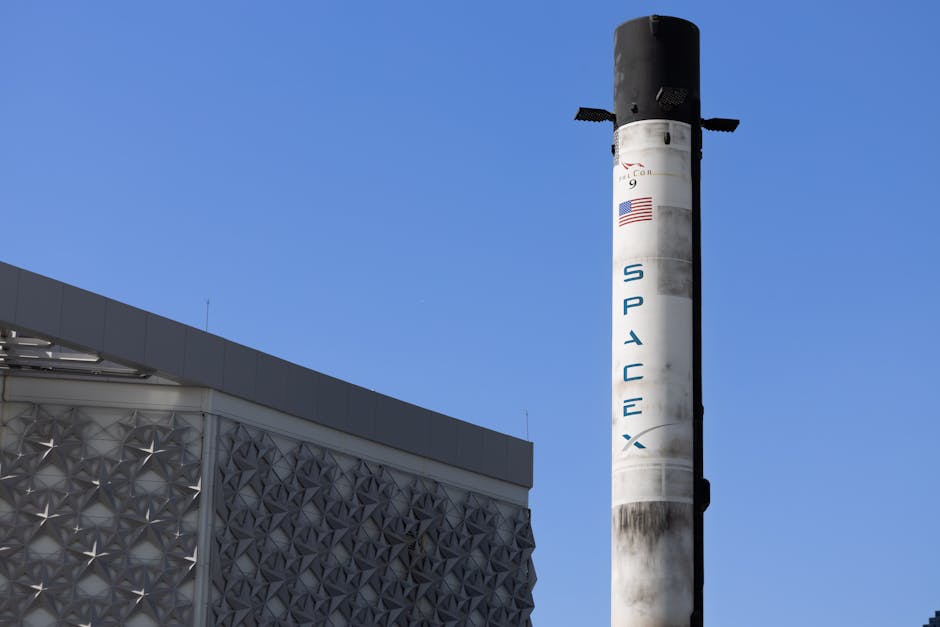
A week where Elon Musk felt less like a founder—and more like a system
Some people trend because they say something outrageous. Elon Musk trends when the world notices that multiple future-defining industries—artificial intelligence, space launch, satellite connectivity, and the online public square—are increasingly intertwined around his companies.
In the past, you could treat these as separate stories: SpaceX launches, Starlink expands, X argues, xAI ships updates. But this week, those threads tightened into one narrative: the infrastructure of intelligence and communication is consolidating.
That’s why headlines feel louder. It’s not just “another Elon cycle.” It’s a structural shift: the same person who shapes how information spreads on X also influences how internet access is delivered via Starlink—and, through xAI, how machine intelligence is trained, deployed, and positioned for mass adoption. When those pieces move together, the public reacts, investors lean in, regulators pay attention, and the internet does what it always does: it becomes a courtroom.
Why Elon Musk is trending right now (verified, not hype)
There are two concrete drivers behind the current wave of attention—both reported widely in global business and geopolitical coverage:
- SpaceX’s acquisition of xAI: Multiple reports (including Reuters) describe SpaceX executing an all-stock acquisition of xAI, bringing the AI company—best known for the Grok chatbot and its relationship to X—under SpaceX as a wholly owned subsidiary. Coverage emphasizes not only the scale of the combined entity but also the deal structure, debt considerations, and the strategic logic of aligning AI ambitions with SpaceX-scale infrastructure.
- Starlink’s role in conflict and security: Reuters reported that Ukraine said Starlink terminals used by Russian forces were deactivated, describing a “whitelist” approach intended to allow verified terminals while blocking unauthorized ones. This pushed Starlink back into global headlines—not as a consumer internet service, but as a strategic communications layer with real-world consequences.
Put simply: Musk is trending because the world is discussing power—who has it, how it’s used, and how quickly the rules are changing.
The “AI + Space” play: what changes when xAI sits under SpaceX
Even if you ignore the personalities and the online arguments, the underlying strategy is easy to see: AI is becoming an infrastructure industry. It needs massive compute, energy, connectivity, and distribution. SpaceX already operates like an infrastructure company: it launches at high cadence, manufactures at scale, and runs a global satellite network through Starlink.
When an AI company becomes linked to that kind of industrial machine, the story stops being “another chatbot.” It becomes a question of vertical integration: How tightly can intelligence, connectivity, and distribution be bundled?
Why investors care (and why everyday readers should too)
Markets tend to reward companies that control critical layers of a stack. In the AI era, that stack typically includes:
- Compute (chips, data centers, and training clusters)
- Data & distribution (where users interact and where feedback loops happen)
- Connectivity (how fast information moves, especially outside traditional networks)
If you see Musk as a “builder,” you view this as efficiency and acceleration. If you see him as “too central,” you view it as consolidation risk. Either way, it’s headline fuel—because it touches the future of competition, governance, and control.
Starlink: the quiet force behind the loudest debates
Starlink is often described as “satellite internet,” but that phrase understates what it has become: a global connectivity layer that can matter in disasters, rural development, and national security.
That’s why the Reuters report about Starlink terminals being deactivated in the Ukraine conflict landed so heavily. It signals that access can be managed through verification systems—useful for preventing misuse, but also a reminder that private connectivity tools can sit inside geopolitical outcomes.
Why this matters beyond war zones
Once a network becomes critical, it stops being “just a product.” It becomes something governments, militaries, telecom providers, and regulators must account for. That creates an entirely different kind of scrutiny—and it keeps Musk in the center of the conversation whether he wants it or not.
Direct-to-device satellite service: the next attention trigger
Separately, Starlink’s “direct-to-cell” ecosystem continues to attract attention because it blurs the old boundaries between satellite and telecom. In the U.S., T‑Mobile has public-facing information about a Starlink-enabled satellite phone service concept (“T‑Satellite with Starlink”), and Starlink itself highlights direct-to-cell partnerships and reciprocal access concepts across partners.
Even if most readers never use it this year, the idea alone is disruptive: connectivity that follows you beyond towers. That is a major narrative engine, and it’s one reason “Starlink” and “Musk” keep trending together.
X as the amplifier: why every Musk story becomes a cultural battle
There’s a unique feedback loop at play: Musk isn’t just in the news—he owns one of the places where news is fought over. X is simultaneously a platform, a media channel, a political arena, and a real-time public sentiment engine.
That means every SpaceX or xAI headline gets instantly debated on X, often with Musk’s own commentary acting as fuel. Even when the core event is business or geopolitics, the public experiences it as culture—because the conversation plays out in public, at scale, with maximal emotion.
The deeper issue: “how much future should one ecosystem own?”
When people argue about Elon Musk, they usually argue about personality. But the durable question underneath is structural:
- Should critical systems be private? (launch access, connectivity, AI distribution)
- How should cross-border infrastructure be regulated?
- What happens when speed outruns accountability?
- Who decides the rules for AI, speech, and connectivity?
This is why Musk keeps dominating global headlines. The conversation isn’t only about him. It’s about the governance of the future.
The astrology angle: reading the moment without turning it into prophecy
Astrology, at its best, doesn’t claim to “cause” events. It offers a symbolic language for interpreting collective moods, power shifts, and timing themes. In a week like this—where the world is discussing networks, control, acceleration, and rule-making—several planetary archetypes become especially relevant as a lens of reflection.
Pluto in Aquarius symbolism: power moving into networks
In astrological symbolism, Pluto correlates with deep transformation, power dynamics, consolidation, and the exposure of what is hidden. Aquarius correlates with networks, technology, systems, and collective life.
When we use “Pluto in Aquarius” as a symbolic frame, we naturally ask questions like:
- Who controls the networks we depend on?
- What happens when infrastructure becomes ideology?
- How does power behave when it lives inside platforms?
Whether you love Musk or distrust him, the current headline wave matches this symbolism: debates about connectivity (Starlink), intelligence at scale (xAI), and public discourse (X) all revolve around the architecture of the collective.
If you want a deeper astrology read on the broader collective atmosphere, you can explore this internal piece: The Aquarius Stellium Peak 2026: Why Everything Is Changing at Warp Speed.
Saturn symbolism: regulation, accountability, and reality checks
Saturn symbolizes boundaries, responsibility, and the consequences of scaling. Every time innovation speeds up, Saturn questions rise: laws, oversight, standards, and accountability. That’s exactly what happens when AI becomes infrastructure and satellite connectivity becomes strategic.
The public’s “too much power” reaction is Saturn in action: a demand for structure. The market’s “this is the future” reaction is also Saturn: a recognition that the future requires durable systems, not just hype.
Mercury cycles: information volatility and hot takes
Mercury symbolizes communication, messaging, narrative, and how stories spread. In weeks where Musk dominates headlines, Mercury themes tend to be loud: leaks, debates, platform arguments, and the speed at which a narrative mutates.
If you feel overwhelmed by the volume of takes, that’s the Mercury lesson: not every thought deserves a broadcast. A practical internal read for navigating reactive communication energy is: Mercury Conjunct Mars: Why You Should Think Twice Before Sending That Text.
Eclipse season symbolism: turning points and public intensification
Eclipse periods are often associated (symbolically) with heightened visibility, sudden revelations, and fast-moving shifts in public attention. Even when eclipses are not “causing” events, the collective tends to experience them as turning points: what was background becomes foreground.
If you’re tracking the broader February energy, this related internal piece may be useful: The Ring of Fire Solar Eclipse: 3 Things You Must Clear Out Before Feb 17.
What this means for you: a grounded way to process the “Musk week”
Whether you’re fascinated, skeptical, inspired, or exhausted by the headlines, you don’t have to be pulled into the extremes. Here are practical, AdSense-safe, life-coach-style takeaways that keep the tone human and strategic.
1) Audit your dependencies (without fear)
Make a quick list of what you rely on daily: internet access, platforms, cloud tools, AI assistants, messaging apps. The point isn’t paranoia—it’s awareness. When systems consolidate, awareness becomes a personal advantage.
2) Choose one source of truth per story
Hot takes multiply faster than facts. Decide that for each major story you’ll read one primary report (a reputable wire, official statement, or direct source) before you react. This keeps you out of algorithmic emotional loops.
3) Treat the future like a skill, not a mood
In a world reshaped by AI and networks, adaptability is a daily practice. Focus on durable skills: communication, learning speed, discernment, emotional regulation, and strategic thinking. That’s how you stay strong no matter which company trends next week.
Final reflection: why Musk will keep trending
Elon Musk dominates headlines when the world senses that the stakes have changed. This week, the attention is fueled by verifiable developments—SpaceX’s move involving xAI and ongoing Starlink-related geopolitical coverage—plus the broader cultural question of how quickly infrastructure, intelligence, and narrative power are consolidating.
From an astrology lens, the collective mood mirrors long-era symbolism: networks becoming power centers, systems being renegotiated, and accountability debates intensifying. You don’t have to worship or demonize the figure at the center of it. The more useful question is: How consciously are you choosing your relationship to the systems shaping your life?
That’s the real invitation of this moment—one you can apply long after the trend chart moves on.
Disclaimer
Astrology Disclaimer: Astrology content is provided for insight, self-reflection, and personal growth. It is not a guarantee of outcomes.
Professional Advice Disclaimer: This article is not a substitute for professional legal, financial, medical, or investment advice. Always consult qualified professionals for important decisions.