The Power of Planetary Transits: How Current Astrological Events Affect You
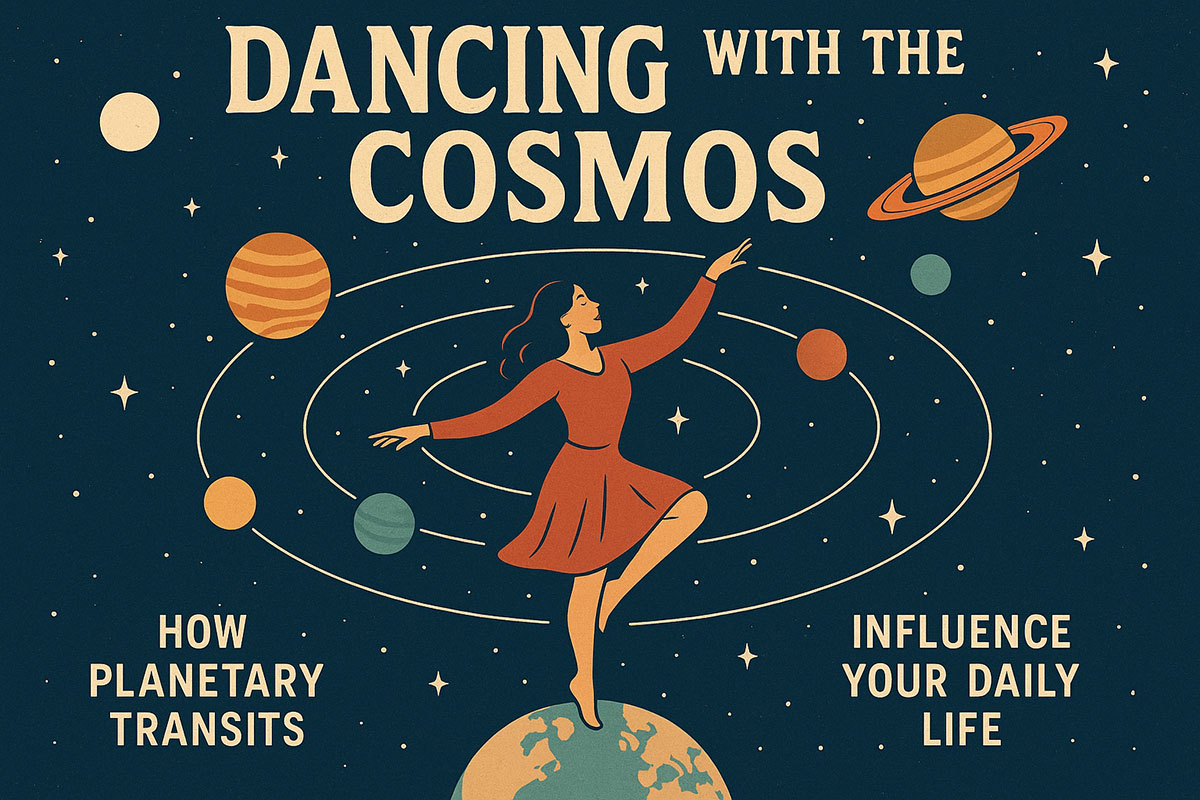
Dancing with the Cosmos: How Planetary Transits Influence Your Daily Life
Have you ever felt a sudden shift in energy, a change in motivation, or an unexpected turn of events that seemed to come out of nowhere? You might have been experiencing the subtle yet powerful influence of planetary transits.
What are Planetary Transits?
Imagine the solar system as a giant clock, with each planet moving at its own pace. A transit occurs when a moving planet forms an aspect (angle) to a point in your birth chart (e.g., your Sun, Moon, or Ascendant). Transits act like cosmic weather: they don’t force outcomes, but they can describe the climate you’re navigating.
How do Transits Work?
- Trigger themes you already carry in your chart.
- Activate houses (life areas) the transiting planet touches.
- Color timing: short, medium, or long cycles depending on the planet (Moon = hours/days; Pluto = years).
The Key Players
- Jupiter: expansion, opportunity, confidence.
- Saturn: structure, tests, mastery.
- Uranus: surprise, innovation, freedom.
- Neptune: imagination, spirituality, fog.
- Pluto: deep change, power, renewal.
Read Your Transits in 3 Steps
- Locate the transit: which planet + aspect + degree?
- Map the house it falls in (life area).
- Translate to action: what one small step aligns with this energy? (e.g., Saturn in 6th ⇒ tighten routines; Jupiter in 9th ⇒ pitch a talk, book travel).
Practical Examples
- Sun in Cancer, Aries Rising: Saturn transiting your 12th might ask for boundaries with burnout—schedule true rest.
- Libra Sun, Scorpio Rising: Uranus in your 7th? Expect partnership plot twists—stay flexible and communicate early.
Related Reading
- Start here: /zodiac-signs
- Birth Chart basics: /birth-chart
- Compatibility: /love-compatibility
- Retrogrades: /blog/harnessing-the-power-of-retrograde-planets-in-your-daily-life
FAQs: Planetary Transits
What’s the difference between a transit and a progression?
Transits use the current sky on your natal chart; progressions are a symbolic “day-for-a-year” technique describing inner development.
Do transits guarantee events?
No—think probabilities and tendencies. Your choices matter. Transits describe the weather; you choose the route.
Which orbs should I use?
Keep it tight for outer planets (1–2° for exact aspects), wider for faster bodies (up to ~4–5°) depending on your practice.
How long does a transit last?
Moon: hours; Mercury/Venus: days–weeks; Mars: weeks; Jupiter: months; Saturn: ~2–3 years by house; Uranus/Neptune/Pluto: longer arcs.
How do I start if I’m new?
Track one transit this week and pair it with one small action. Log results and iterate.
Tip: Add our site to bookmarks and check the Weekly Guides for current transit highlights.